
Autumn
This term we are working on a real life commission for David Allen, The Mantle of the Expert Network and The Black Country Museum.
We have been asked to take part in a Living Histories event where we will work in role as needle makers being interviewed by delegates who will be in role investigating working conditions in Victorian factories.
In our Mantle story, we have been working as Her Majesty's Inspectors. Lord Shaftesbury read a newspaper article written by Charles Dickens about how wonderful the needle-making mills were in Redditch. He couldn't quite believe that they would be so different to working in cotton mills and coal mines, so he asked us to visit.


It took us two days to travel to Redditch [in our Mantle – using our imagination!] and then we were told we couldn't go into the mill without permission! We decided to ask people in the town what they thought of the mills and they gave us a mixed picture. We also tried to speak to the workers as they left the mill, but they hardly said a word.
One of locals, however, pointed us in the direction of the churchyard and told us to look for Edward Matthews. We found his gravestone and read that he had died at the pointer's wheel. When we researched the jobs involved in making needles we discovered that the pointer's job was the most dangerous and deadly and that most pointers died before the age of 35. Why then would Edward Matthews have an inscribed gravestone if deaths of pointers were so common?
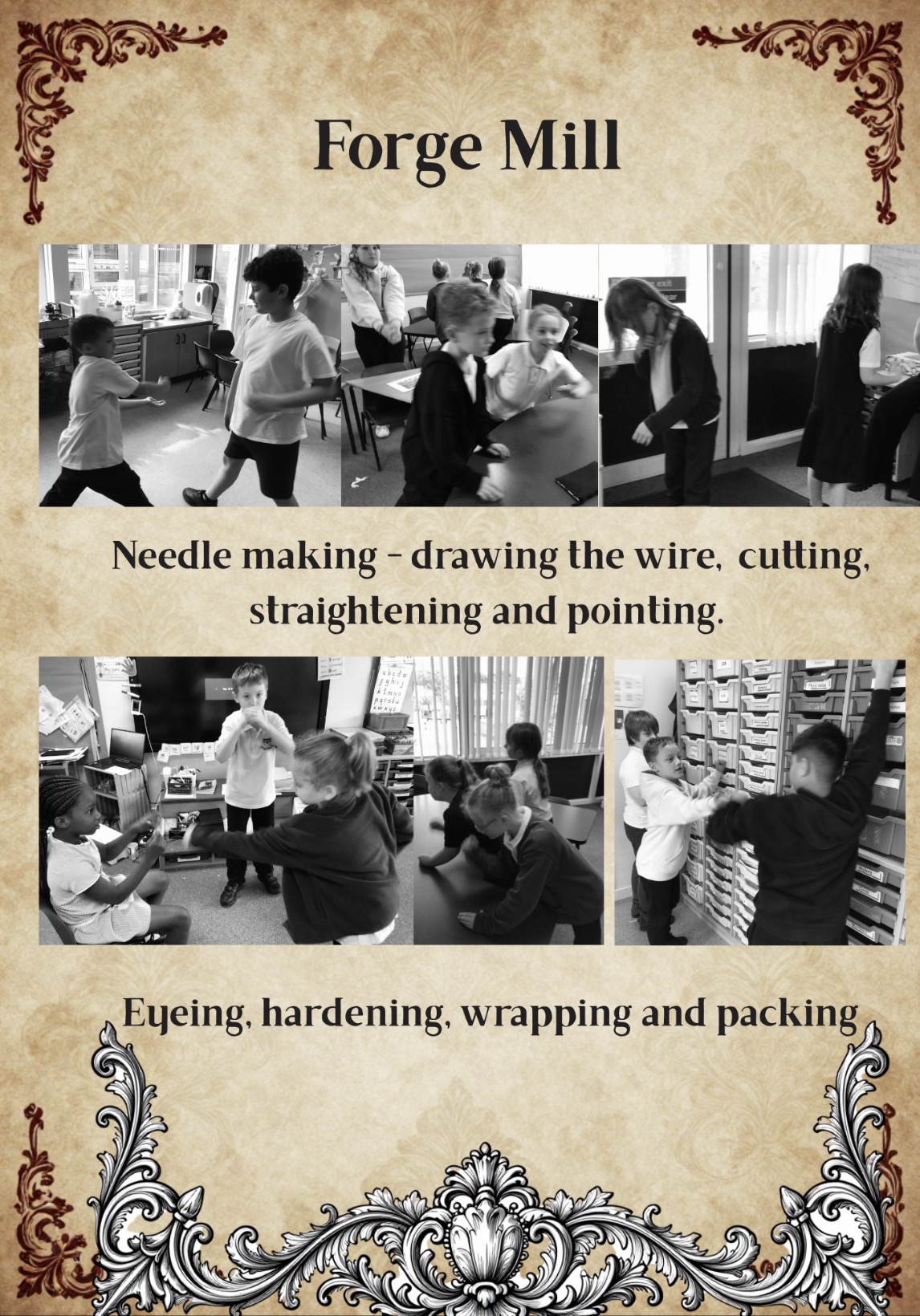
We thought it must be an accident and not the dreaded "pointer's rot". We used drama to represent the different areas of the mill and the day Edward Matthews died. We realised that we must report this to Lord Shaftesbury at once.
The Manufacturer decided that he must do something to make the pointer's job safer, so he installed fans on the machines to reduce the dust and stop the workers from inhaling dangerous bits of metal.
However, he needed to lower the pointer's wages to pay for this machinery and, of course, they wouldn't need to be paid more if their job was as safe as everyone else's.
The pointers were not happy about this! They needed the money for their family and what about those who already had pointer's rot? This wouldn't help them, so they planned some sabotage!
Out of the Mantle, David Allen and The Mantle of the Expert Network asked us if we could share this work at The Dorothy Heathcote Living History Project event at the Black Country Museum. Well, of course we could! Parents sorted out costumes with Ms Beale making everyone a waistcoat and a hat. Miss Cole and Miss Davies made sure everyone had an apron to wear. We created our roles and made sure we had enough knowledge to be able to talk as needle workers to the delegates in role as inspectors.
Have a look at our video...
Thanks to David and The Black Country Museum we were also able to visit buildings in the museum including a Victorian back to back house, the chapel, the iron and chain making workshops and the boatyard.
As Alfie said - it was the best day ever!


Back at school, we joined 4B in their drama. They were needle workers and we were the inspectors. The workers - especially the pointers - were still not happy and went on strike.
We learned that this did happen in real life too.
We made a timeline of important events in the history of needle making and found out that eventually the pointers had to accept the new machinery and with it the lower wages and safer working conditions.
We also discovered that one of the needle making mills in Redditch still some machinery inside! It is now the only scouring mill left in the world! So we prepared to visit it in real life!